Here is a scene I have seen too many times. A candidate has the right degree, the right CV, and spends two weeks preparing answers. Then on interview day, they walk in with a wrinkled shirt and dusty shoes, and the interviewer’s first thought is already made up.
Clothes will not get you the job. But the wrong outfit can quietly hurt your chances before you say a single word. So let me explain what to wear to a job interview in Pakistan, the way I would tell a friend the night before the big day. No fashion degree needed.
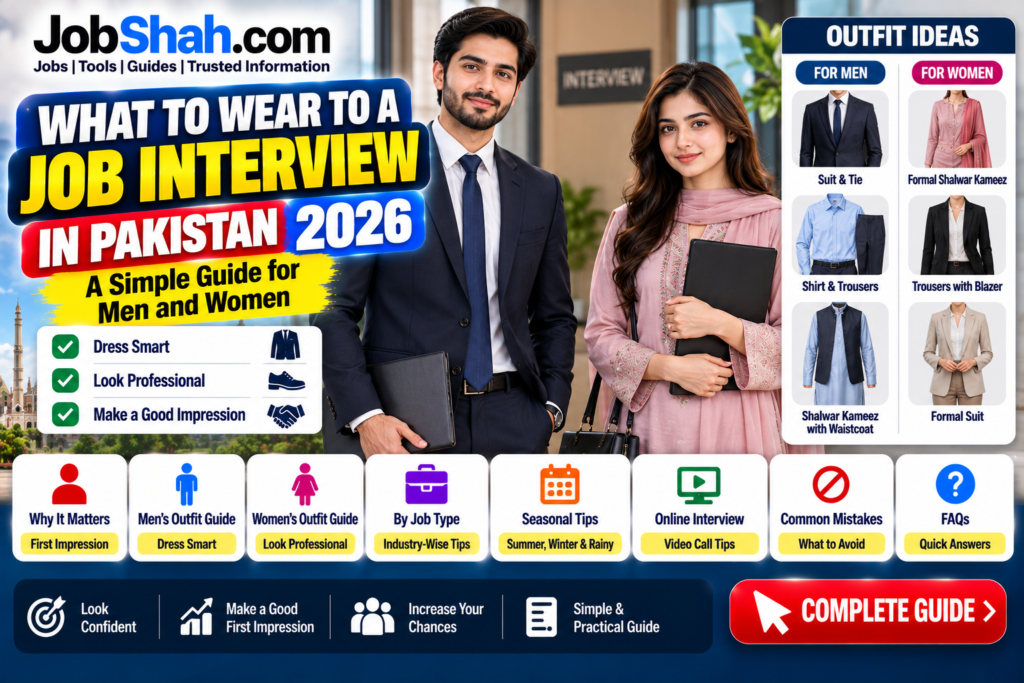
The One Rule That Beats All Others
Dress one step more formal than the people who work there, and make sure it is clean, ironed and comfortable.
That is the whole secret. Everything below is just detail. And if you are not sure what the company expects, you can:
- Check the company’s website and social pages for photos of staff
- Ask the HR contact politely if there is a dress code
- Ask a friend or senior who works there or at a similar place
Quick Guide: What to Wear by Type of Job
Dress codes differ by industry. Treat this as practical guidance, not a law.
| Type of Job | Safe Choice |
|---|---|
| Government and public sector | A clean, simple shalwar kameez in a light or plain colour. Shalwar kameez is the national dress and is widely worn in government offices. |
| Banks, insurance and finance | Formal shirt and trousers (tie optional) or a suit for men. Formal shalwar kameez or a professional suit for women. |
| Multinationals and large corporates | A suit or a formal shalwar kameez with a waistcoat or blazer. Both are widely accepted. |
| IT, startups and software houses | Neat smart-casual: ironed shirt or kurta, trousers or clean chinos. No torn jeans or graphic tees. |
| Teaching and education | Modest, formal and simple. A plain shalwar kameez or formal kurta with trousers works well. |
| Sales, retail and customer service | Neat formal wear, clean shoes and light grooming |
| Factory and technical posts (office interview) | Formal or smart-casual clothes, as above |
| Factory and technical posts (shop-floor or trade test) | Clean, full-sleeve, comfortable clothes and closed shoes. Follow the safety instructions in the ad. |
A survey of senior managers by the staffing firm Accountemps in 2019 found that 37% said candidates should always wear a formal suit to interviews, while 36% said it depends on the position. That tells us the same thing: it depends on the job, so do your homework.
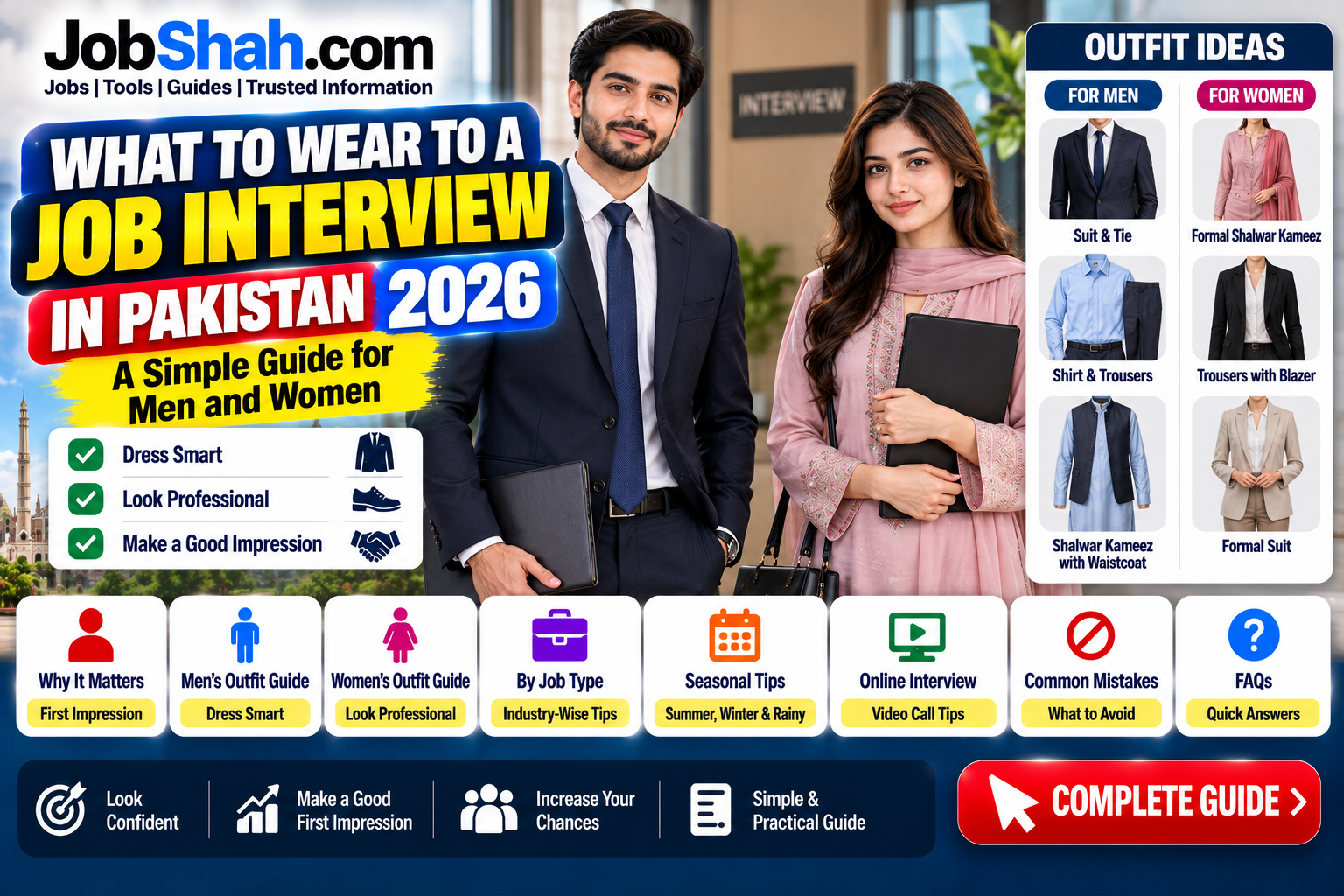
What Men Should Wear
Option 1: Shirt and Trousers
- A plain, ironed full-sleeve shirt in white, light blue or another light colour
- Dark trousers that fit properly, not too tight and not too loose
- A tie if the company is formal, such as a bank, and optional elsewhere
- Clean, polished leather shoes and matching socks
- A belt that matches your shoes
Option 2: Suit or Blazer
- Dark colours like navy, grey or black look professional
- Make sure the suit fits your shoulders and sleeves
- Button the jacket properly when standing
Option 3: Formal Shalwar Kameez
- Choose a plain colour such as white, cream, light grey or pastel
- It must be freshly ironed, with no stains or frayed collars
- Add a waistcoat or blazer for a corporate look
- Wear polished shoes, formal Peshawari chappal or clean leather sandals. For banks and multinationals, closed shoes are safer.
What Men Should Avoid
- Wrinkled clothes and dirty shoes
- Sandals or flip-flops for corporate interviews
- Shorts, T-shirts with big prints, or sportswear
- Very strong perfume or cologne
- Heavy chains, rings or showy watches
What Women Should Wear
Dress in a way that is professional and comfortable for you. Hijab, abaya, dupatta or scarf are all perfectly fine if that is how you dress every day. Nobody should be judged for that.
Option 1: Formal Shalwar Kameez
- A plain or lightly printed kameez in soft colours
- A proper fit, neither too tight nor too short
- Matching shalwar or straight trousers
- A dupatta or scarf if you are comfortable with it
Option 2: Trousers with a Long Kurta or Blouse
- Straight formal trousers with a long kurta or a modest blouse
- A blazer or jacket for corporate interviews
Option 3: Formal Suit
- A trouser suit or skirt suit that is modest and well-fitted
What Women Should Avoid
- Heavy embroidery, party wear or shiny fabrics
- Very tight, transparent or sleeveless outfits
- Jeans for formal interviews, unless the company has confirmed that casual wear is fine
- High heels you cannot walk in, or noisy bangles and jewellery
- Heavy make-up or very strong perfume
Keep it simple: neat hair, light make-up if you wear any, short clean nails and comfortable shoes.
Dressing for the Season
| Season | Tips |
|---|---|
| Summer | Choose breathable cotton or lawn. Carry tissues, a spare shirt or scarf in your bag, and avoid thick fabrics that show sweat. |
| Winter | Wear a plain blazer, coat or neat shawl over your outfit. Avoid bulky hoodies and sports jackets. |
| Rainy days | Carry an umbrella, wear closed shoes and leave early. A wet, muddy outfit is hard to recover from. |
Online and Video Interviews
- Dress fully, top and bottom. You never know if you will need to stand up.
- Pick a plain, solid colour. Very bright or busy patterns look messy on a camera.
- Sit in a quiet place with a plain background and face a window for light.
- Check your camera, internet and charger before the call.
The Night Before Checklist
| Item | Done? |
|---|---|
| Outfit ironed and hung | |
| Shoes cleaned or polished | |
| Folder with documents (CNIC, degrees, CV copies, experience letters) | |
| Pen and notebook | |
| Phone charged | |
| Alarm set with extra travel time |
If your outfit is new, wear it once at home first. A stiff collar or tight shoe can ruin your focus.
Grooming and Small Details That Matter
- Take a bath and use deodorant
- Keep hair neat and combed
- Men should shave or trim their beard neatly
- Clean, short nails
- Fresh breath, and carry a mint
- A light fragrance, or none at all
Common Mistakes to Avoid
| Mistake | Why It Hurts |
|---|---|
| Overdressing in party clothes | Looks like you do not understand the workplace |
| Underdressing in casual clothes | Looks like you are not serious |
| Wearing something uncomfortable | You will fidget and lose focus |
| Ignoring the weather | Sweat, mud and shivering distract you |
| Forgetting documents and a pen | Hurts your confidence before you even sit down |
Also Check > How to Pass a Government Job Interview in Pakistan
Do Not Forget the Rest of the Package
Your outfit opens the door, but your answers decide the result. Read these next:
- 10 Interview Mistakes You Are Making Right Now
- How to Write a CV for Government Jobs in Pakistan
- How to Write a Professional Resume with No Experience in Pakistan
- What Is a Character Certificate?
- How to Apply for a Government Job After Graduation
Companies and Jobs Where a Neat Look Helps
| Topic | Link |
|---|---|
| Bank jobs | Bank Jobs category |
| Private jobs | Private Jobs category |
| Government jobs | Government Jobs category |
| Packages Limited | Packages Limited Jobs |
| Gul Ahmed | Gul Ahmed Jobs |
| Internships | Internships category |
Contact and Help
| Detail | Information |
|---|---|
| Topic | Interview dress code in Pakistan |
| Best Advice | Check the interview email or call letter, and ask HR if a dress code is mentioned |
| Job Listings | Jobshah.com |
Final Thoughts
You do not need expensive clothes to look professional. You need clean, ironed, well-fitting clothes that match the job, plus tidy grooming and polished shoes. Dress one step more formal than the workplace, check the weather, and spend your energy where it counts: preparing your answers.
Bookmark Jobshah.com for new vacancies, interview guides and preparation help.
Frequently Asked Questions
1. Is shalwar kameez acceptable for a job interview in Pakistan? Yes. A clean, ironed, formal shalwar kameez is widely accepted, especially for government jobs and many corporate offices. Adding a waistcoat or blazer makes it look more formal.
2. Do I need to wear a tie? Not always. Banks and some corporate offices expect one, while many other workplaces do not. If you are unsure, a tie is safer than no tie.
3. What colour should I wear to an interview? Plain, simple colours such as white, light blue, grey, navy and black look professional. Avoid very loud colours and big prints.
4. What should women wear to a job interview in Pakistan? A formal shalwar kameez, trousers with a long kurta or a modest suit in soft colours. Hijab and scarf are fine if that is your normal dress.
5. Can I wear jeans to an interview? For formal workplaces, no. Only wear them if the employer has clearly said that casual dress is fine.
6. What shoes should I wear? Clean, polished closed shoes for corporate and bank interviews. With shalwar kameez, formal Peshawari chappal or clean leather sandals work for many offices.
7. What should I wear for a factory or technical trade test? Clean, comfortable full-sleeve clothes and closed shoes. Follow any safety rules in the advertisement.
8. What should I wear to an online interview? Dress fully, choose a plain colour and sit in a quiet place with good light and a plain background.